
Featured Export Greeting Cards & 3D Pop-Up Series
Precision Engineered, Hand-Assembled, and OEM/ODM Custom Volume Production
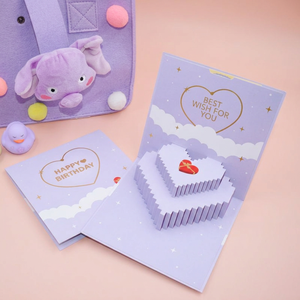
Simple High End Handmade Greeting Card Premium Matte Varnish 3D Pop Design
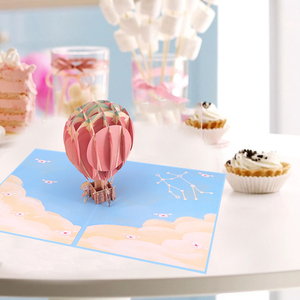
Custom Luxury Bulk 3D Hot Air Balloon Pop-Up Greeting & Invitation Card
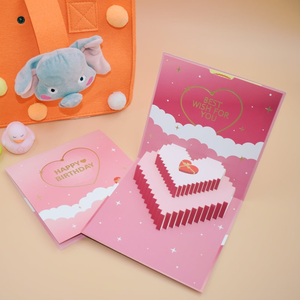
Simple High-End Handmade Paper Greeting Cards Premium UV Varnishing
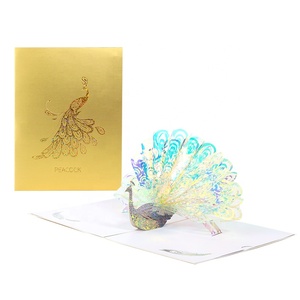
Laser Cut Colorful Peacock 3D Pop Up Gift & Holiday Greeting Card
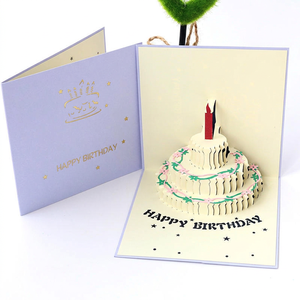
Creative Fold High-Quality Cardstock 3D Pop Design UV Printing
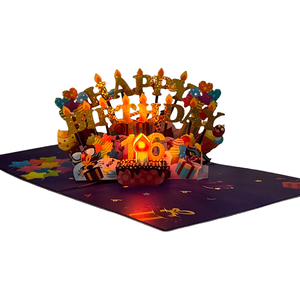
Luxury Blowable LED Light Candle Cake & Music Pop Up Greeting Card
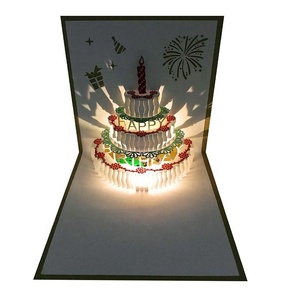
3D Pop Up Interactive Warming LED Light & Polyphonic Musical Card
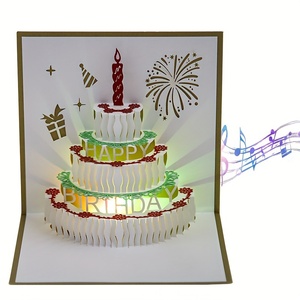
Happy Holiday Pop Up Cake Musical Card 3D Audio Greeting Series
1. The Strategic Blueprint for Global Greeting Card Sourcing
In the global retail sector, greeting cards—specifically Christmas, holiday, and celebration pop-up cards—represent one of the highest gross-margin paper product categories. As major global publishers, stationery brands, and mass-market retailers evaluate their supply chains for 2025 and beyond, China remains the indispensable manufacturing hub for high-complexity, engineered paper products.
Modern card manufacturing has evolved far beyond traditional offset printing on standard paperboard. Today's commercial buyer requires a sophisticated combination of high-speed color management, zero-defect die-cutting, intricate hand-assembly for mechanical 3D pop-up structures, and seamless integration of IoT audio-visual components (such as blowable LED sensors and high-fidelity sound modules).
Key Information Gain for B2B Procurement Officers:
While basic single-fold printed cards can be localized, complex 3D pop-up greeting cards require between 8 to 25 manual assembly touchpoints per unit. China’s concentrated paper-crafting ecosystem in Zhejiang and Guangdong provinces delivers an unmatched balance of skilled manual craftsmanship, automated surface finishing, and cost-effective bulk export logistics.
2. Technical Specifications & Quality Control Engineering
Evaluating a Chinese Christmas card factory requires auditing precise manufacturing parameters. Superior structural integrity ensures cards lie completely flat when collapsed in envelopes, yet erect flawlessly when opened by the recipient.
Paperboard Substrates & Material Durability
The foundation of any premium greeting card lies in its substrate composition. Leading exporters utilize certified virgin pulp and recycled blends tailored to specific structural loads:
| Substrate Type | Standard Basis Weight | Primary Application | Key Performance Attribute |
|---|---|---|---|
| C1S Art Card (Coated 1 Side) | 250 GSM – 350 GSM | Card covers & standard folds | High gloss surface for vivid offset color reproduction |
| Uncoated Matte Specialty Stock | 280 GSM – 320 GSM | Luxury & eco-minimalist collections | Tactile, warm texture; exceptional fountain-pen writeability |
| High-Tensile Kraft / Recycled Stock | 300 GSM – 350 GSM | Eco-series & rustic Christmas themes | FSC-certified 100% PCR (Post-Consumer Recycled) fibers |
| Inner Mechanical Pop-Up Paper | 180 GSM – 230 GSM | 3D structural inner mechanisms | High dimensional stability; resists tearing along score lines |
Surface Finishing Technologies
To compete on premium retail shelves, surface enhancements must be executed with sub-millimeter registration accuracy. Advanced OEM production capabilities include:
Precision Hot Foil Stamping
Utilizes brass engraved plates operating at 130°C–160°C to apply metallic gold, silver, rose gold, or holographic foils without scorching textured papers.
Selective Spot UV & 3D Embossing
High-gloss polymer coatings applied precisely over specific graphic elements (e.g., snowflakes or pine needles) to create striking tactile contrast.
Laser Micro-Cutting
High-speed CO2 laser cutters achieving cutting tolerances of ±0.1mm, enabling ultra-intricate lace designs, detailed peacock feathers, and architectural silhouettes.
3. Engineering 3D Pop-Up Mechanics & Micro-Electronics
The fastest-growing segment in the greeting card exporter ecosystem is interactive and mechanical cards. Bridging traditional papercraft with modern micro-electronics creates an unforgettable unboxing experience that drives higher retail price points ($12.99 – $24.99 SRP).
V-Fold & Parallel Fold Architecture
Engineered paper linkages designed via CAD software. Every structural angle is calculated so that opening the card to 90° or 180° automatically deploys multi-tiered Christmas trees, hot air balloons, or gingerbread houses.
Sound Chip & Audio Integration
Ultra-thin PCB chips paired with high-output 27mm or 30mm speakers. Pre-loaded with custom MP3/WAV holiday tunes or customizable recordable voice chips with low-power draw for extended battery life.
Blowable LED Sensor Technology
Innovative thermistor or acoustic microphone sensors embedded within 3D birthday or Christmas cakes. When the user physically blows on the LED flame, the micro-controller cuts power to the light while triggering a celebratory applause audio file.
Safety & Environmental Compliance
All electronic components integrated into cards exported to the US, UK, and EU comply with RoHS, CE, and FCC standards. Batteries are enclosed within child-safe sealed paper chambers with insulated pull-tabs to prevent pre-activation during shipping.
4. Future Procurement Trends in the Global Greeting Card Market (2025–2030)
As international supply chains navigate shifting consumer habits, regulatory pressures, and environmental targets, wholesale importers must align with factories capable of adapting to these three major macro trends:
Trend A: The Plastic-Free & Zero-Waste Imperative
European and North American markets are aggressively phasing out single-use plastic cellophane wraps. Leading Chinese exporters have retooled their packaging lines to offer:
- FSC Certified Paper Bands / Card Clasp Stickers: Holds the card and envelope securely without plastic sleeve wrap.
- Compostable PLA Cellophane: Plant-derived bio-sleeve packaging that degrades naturally within 180 days.
- Water-Based Biodegradable Foils: Replacing traditional plastic-backed foil stamping with plastic-free metallic transfer technology.
Trend B: Small-Batch Agile Sourcing & Fast OEM Iteration
Traditional MOQs of 10,000 units per artwork are giving way to agile, digital proofing and small-batch flexible production. Advanced factories now offer digital laser cutting and short-run UV digital printing, enabling boutique brands to launch 20–30 seasonal SKUs with MOQs as low as 500 to 1,000 units per design.
Trend C: Integrated Cross-Category Merchandising
Retail buyers no longer buy greeting cards in isolation. Successful collections share unified artistic themes across matching gift wrapping paper, tissue wrap, hardback notebooks, daily planners, and decorative gift bags. Partnering with a manufacturer capable of multi-category production ensures color consistency across different paper weights and finishes.
5. Why Partner with Our China Manufacturing Ecosystem?
Building on over two decades of export experience, our manufacturing facilities bridge art-led illustration with industrial manufacturing rigor. We serve boutique publishers, museum stores, wholesale distributor networks, and mass-market chain stores globally.
World-Class Machinery Park
Equipped with Heidelberg 6-color offset presses, automatic die-cutting machines, high-speed automated folder-gluers, and dedicated laser assembly lines.
Master Craftsmen Hand-Assembly
Over 300 skilled artisans dedicated to meticulous folding, glue application, and multi-layer pop-up alignment for complex 3D structures.
Rigorous Quality Assurance
Four-stage inspection process: raw paper batch testing, color print proofing against Pantone standards, 100% manual pop-up opening test, and pre-shipment drop tests.
6. Frequently Asked Questions for B2B Buyers & Importers
What are the typical Minimum Order Quantities (MOQs)?
For standard printed greeting cards, our MOQ starts at 1,000 pieces per design. For custom 3D pop-up cards or LED/music cards requiring specialized tooling, the baseline MOQ is typically 1,000 to 3,000 units depending on structural complexity.
What is the lead time for sampling and mass production?
Physical sample proofing (including digital laser cut prototyping) takes 5 to 7 working days. Mass production generally requires 25 to 35 calendar days after sample approval and deposit confirmation.
How early should buyers place Christmas card orders?
Due to ocean freight transit times (typically 25–40 days from China to North America or Europe), seasonal Christmas orders should be finalized between March and June. This guarantees delivery to warehouse hubs by August or September, ready for retail distribution.
Can you manufacture under strict OEM brand confidentiality?
Yes. We routinely execute Non-Disclosure Agreements (NDAs) with major international brands. All custom artwork files, structural CAD dies, and proprietary artwork remain 100% confidential and exclusive to your account.
What environmental paper certifications do you support?
Our raw material supply chain provides 100% FSC (Forest Stewardship Council) Mix and FSC Recycled paper certifications upon request. We also provide compliance documentation for plastic-free packaging initiatives.
How are moisture and humidity managed during ocean shipment?
Paper stock is sensitive to maritime humidity. All export cartons are lined with heavy-duty polyethylene barrier bags containing high-absorption industrial silica gel packs. Master cartons are double-wall corrugated (ECT-44 rated) and pallet-wrapped for maximum stability.
Ready to Scale Your Greeting Card Procurement?
Connect directly with our engineering and sales engineering team to receive factory-direct quotes, request sample catalog kits, or discuss custom 3D OEM development.
Contact Us