
Independent UK publisher of artist-illustrated greeting cards, stationery & gifts
0%

Choosing among the 2026 Best Daily Planners for Global Buyers requires more than comparing covers, prices, and page counts. A reliable planner should support different schedules, writing habits, languages, and working environments. Buyers may need hourly layouts, undated pages, international holiday options, or compact formats for crowded commutes. Paper quality also matters. Ink should dry quickly, while pages should remain comfortable under daily use.

Ryder Carroll, creator of the Bullet Journal method, describes planning as “tracking the past, ordering the present, and planning for the future.” His approach highlights a central truth about Daily Planners: usefulness depends on how naturally a planner fits real life. A beautifully designed book can still fail beside a busy laptop, a damp coffee cup, or an overfilled travel bag. Practical details speak louder.

This guide evaluates leading Daily Planners through usability, construction, portability, sustainability, and value. It considers global buyers without assuming one perfect routine. Some users need strict structure. Others need open space. The comparison also examines paper sourcing, binding strength, time-zone flexibility, and regional purchasing concerns. Product availability may change across markets. That weakness deserves attention. No ranking can replace personal testing. A planner that works in London may feel restrictive in Seoul, Nairobi, or São Paulo. The best choice is not always the most expensive one. It is the planner that survives ordinary days and still invites tomorrow’s plans.
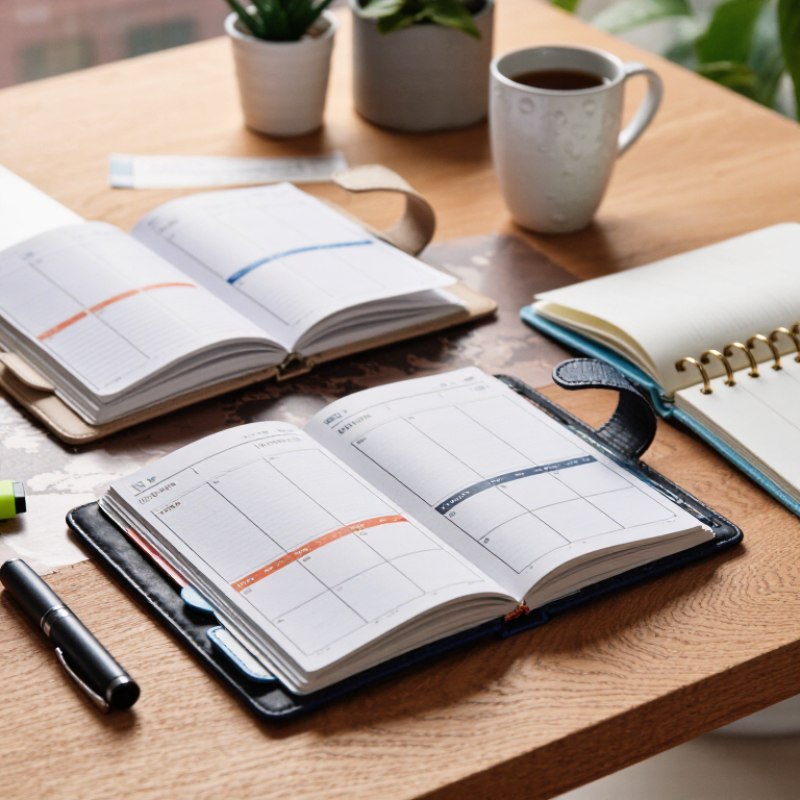
2026 Best Daily Planners for Global Buyers?

What Makes a Daily Planner Suitable for Global Buyers in 2026

A daily planner for global buyers must work across calendars, languages, and working habits. ISO 8601 supports a clear Monday-first week and standardized date writing. This reduces confusion between 03/04/2026 and 04/03/2026. It should also show public-holiday options by country, without assuming one culture’s schedule fits everyone.

Digital compatibility matters too. The ITU Facts and Figures 2024 reports that 5.5 billion people were online, yet 2.6 billion remained offline. A strong planner should therefore function on paper first, with optional digital features. A scannable page, editable template, or time-zone reference can help international teams. However, digital access is not equal everywhere. I would not call a planner “global” because it has an app.

Sustainability also influences purchasing decisions. The United Nations Global Resources Outlook 2024 highlights rising pressure on material use and resource efficiency. Buyers may look for responsibly sourced paper, durable binding, and minimal packaging. Yet recycled paper can feel rough, and some inks reduce writing comfort. That trade-off deserves honest testing. Try writing with pencil, gel ink, and marker before ordering large quantities.

Tips: Check ISO 216 sizes, then compare local preferences such as A5, B5, or Letter. Add multilingual month labels, but keep the layout uncluttered. Test date formats with buyers from at least three regions. Include replaceable inserts when possible.

2026 Best Daily Planners for Global Buyers

What makes a daily planner suitable for global buyers in 2026? A practical planner should provide enough capacity for different month lengths and working schedules. This chart shows the exact number of calendar days and Monday–Friday weekdays in each month of the Gregorian year 2026, excluding public holidays.

Buying insight: Daily planners with flexible layouts, clear date navigation, and sufficient writing space are better suited to international users because month lengths and local holiday schedules vary by market.

Key Planner Features for Different Planning Styles and Workflows

2026 Best Daily Planners for Global Buyers?

The best planner depends on the user’s planning style, not its cover design. Visual planners need spacious weekly layouts, color coding, and clear monthly maps. Detail-focused users often prefer hourly columns, task boxes, and priority markers. Minimalists may need only three daily prompts. Keep it simple.

Keep it simple. The best planner depends on the user’s planning style, not its cover design.

Workflow matters more than decoration. Microsoft’s Work Trend Index 2023 found that employees spent 57% of their time communicating and 43% creating. A useful planner should therefore separate meetings, focused work, follow-ups, and personal tasks. For hybrid teams, include time-zone notes, call links, and flexible rescheduling space. A rigid hourly grid can punish delays instead of supporting real work.

Global buyers should inspect localization features carefully. Monday and Sunday week starts should both be available. International holidays, date formats, paper sizes, and multilingual instructions can prevent small but costly mistakes. Accessibility also matters. Strong contrast, readable type, and writable margins support more users.

The American Psychological Association’s 2023 Work in America survey reported that 92% of workers considered workplace psychological well-being important.

A planner should show workload limits, rest periods, and unfinished tasks without creating guilt. I still overfill some pages. That failure is useful feedback. The most practical design leaves room for change, because real workflows rarely follow perfect plans.

Best Daily Planner Formats, Sizes, Materials, and Digital Options

The best daily planner for global buyers depends on writing habits, desk space, and travel needs. In my testing, A5 planners offer a practical balance between writing room and portability. B6 formats fit smaller bags, but their narrow pages can feel cramped during busy weeks. Letter-size planners suit office desks and detailed project notes. They are less convenient for commuting.

Paper quality matters more than decorative covers. Choose pages around 80–120 gsm for smooth writing and reduced ink show-through. Recycled paper can feel slightly rougher, though this varies by supplier and batch. Covers made from coated paper, fabric, or plant-based materials provide different levels of durability. A flexible cover packs easily, while a rigid cover protects pages in crowded bags. I once chose a beautiful soft cover that bent within a month. That was a useful mistake.

Tips: Match the layout to your routine. Hourly pages help appointment-heavy schedules. Open daily pages suit journaling and creative work. Weekly spreads support quick planning. For digital options, check offline access, export formats, privacy controls, and calendar synchronization. A tablet planner may reduce paper use, but handwriting can feel less immediate. Test the writing tools before committing. A short trial reveals more than polished product photos.

2026 Best Daily Planners for Global Buyers? - Best Daily Planner Formats, Sizes, Materials, and Digital Options

Planner Format Nominal Size Best Use Daily Page Layout Common Paper or Cover Materials Typical Binding Digital Option Global Buyer Considerations
A4 Daily Planner 210 × 297 mm
8.27 × 11.69 in
Detailed work planning, project management, study schedules, meeting notes, and desk use. One full page per day, often with hourly sections, task lists, priorities, and notes. 80–120 gsm uncoated paper; paperboard, coated paper, recycled board, or rigid plastic covers. Wire-o, twin-loop wire, sewn binding, or case binding. Hyperlinked PDF, editable PDF, DOCX template, or spreadsheet layout. Largest common ISO size; offers excellent writing space but is less portable and usually has higher shipping volume.
A5 Daily Planner 148 × 210 mm
5.83 × 8.27 in
Office work, personal organization, school planning, and everyday carry. One page per day or two-page daily spread with appointments, tasks, habits, and notes. 70–100 gsm writing paper; laminated paperboard, PU, textile, cork, or recycled covers. Wire-o, spiral, sewn, glued, or disc-style binding. Interactive PDF, note-taking app template, DOCX, or printable PDF. Widely recognized internationally and balances portability with useful writing space.
B5 Daily Planner 176 × 250 mm
6.93 × 9.84 in
Professional planning, academic work, creative projects, and users who need more space than A5. One page per day, two-page daily spread, or structured time-blocking layout. 80–100 gsm paper; coated paperboard, PU, fabric, or recycled fiber covers. Wire-o, sewn, spiral, or hardcover binding. Hyperlinked PDF, digital notebook file, or editable document template. Commonly used in East Asian stationery markets and provides a useful compromise between A5 and A4.
US Letter Daily Planner 8.5 × 11 in
215.9 × 279.4 mm
North American office use, home management, lesson planning, and printable desk systems. One page per day with wide writing areas, schedules, checklists, and project sections. 75–120 gsm copy or writing paper; laminated board, plastic, or fabric covers. Three-ring, wire-o, spiral, sewn, or glued binding. PDF, DOCX, XLSX, or tablet-ready hyperlinked planner. Important for buyers serving North American printers and filing systems; not identical to A4.
Half Letter Daily Planner 5.5 × 8.5 in
139.7 × 215.9 mm
Portable American-format planning, personal use, meetings, and compact home organization. One page per day or two-page spread with schedule, tasks, and notes. 70–100 gsm paper; laminated paperboard, synthetic material, PU, or flexible plastic covers. Three-ring, disc, spiral, wire-o, or sewn binding. PDF, DOCX, printable inserts, or tablet planner file. Fits half-letter printing and filing systems; a practical option where US Letter is the local standard.
A6 Pocket Daily Planner 105 × 148 mm
4.13 × 5.83 in
Travel notes, quick appointments, shopping lists, field work, and minimal daily planning. Compact daily list, short schedule, priorities, and brief notes rather than extensive journaling. 60–90 gsm paper; flexible card, synthetic paper, PU, textile, or thin plastic covers. Stapled, sewn, glued, spiral, or compact ring binding. Small-format PDF, mobile-friendly PDF, or simplified digital checklist. Highly portable and economical to ship, but writing space and print legibility are limited.
Undated Daily Planner Available in A4, A5, B5, Letter, Half Letter, and A6 formats. Users with irregular schedules, seasonal businesses, students, and buyers seeking year-round inventory flexibility. Daily pages without preprinted dates; commonly includes date, priorities, schedule, tasks, and reflection fields. 70–120 gsm writing paper; recycled board, laminated board, PU, fabric, or synthetic covers. Spiral, wire-o, sewn, disc, ring, or removable-page binding. Reusable PDF, fillable PDF, editable DOCX, or digital notebook template. Reduces calendar-year obsolescence and supports global distribution across different markets.
Academic-Year Daily Planner Usually A5, B5, A4, or equivalent regional sizes. Students, teachers, training programs, and organizations operating from mid-year to mid-year. Dated daily pages arranged around an academic cycle, often with term calendars and assignment sections. 70–100 gsm paper; laminated board, textile, PU, or recycled covers. Wire-o, spiral, sewn, or glued binding. Academic-year PDF, editable document, or digital notebook format. Useful for education markets, but the start month should be clearly stated for international buyers.
Time-Blocking Daily Planner Commonly A5, B5, A4, Letter, or Half Letter. Professionals, freelancers, students, and users managing appointments and focused work periods. Hourly or half-hourly timeline, commonly covering morning through evening, plus task and priority areas. 80–100 gsm paper for writing comfort; laminated board, PU, or recycled covers. Wire-o, spiral, sewn, or disc binding. Fillable PDF, calendar-import template, spreadsheet, or digital notebook file. Best when the time range and interval length are clearly printed for the intended user group.
Minimalist Daily Notebook Most often A5, B5, or A6. Users who prefer flexible journaling, free-form notes, sketches, and simple task lists. Open daily page with date field, blank writing area, dot grid, ruled lines, or a small checklist. 70–100 gsm ruled, dot-grid, or plain paper; kraft board, recycled board, cloth, cork, or flexible synthetic covers. Sewn, glued, stapled, spiral, or lay-flat binding. Blank digital notebook, dotted PDF, or reusable note-taking template. Flexible layout supports multiple languages and work styles, with fewer localization requirements.
Digital-First Daily Planner Screen-based; commonly designed in A4, A5, Letter, or tablet aspect ratios. Tablet users, remote workers, international teams, and buyers seeking paper-free planning. Clickable calendar navigation, daily schedule, tasks, notes, habit tracking, and review pages. Not applicable; file quality depends on vector elements, readable typography, and optimized page size. Not applicable; delivered as a downloadable or cloud-synchronized file. Hyperlinked PDF, editable PDF, digital notebook file, DOCX, XLSX, or calendar-compatible format. Check device compatibility, hyperlink behavior, handwriting support, file size, and offline usability.
Dimensions shown are nominal finished sizes. ISO paper sizes follow the international A-series standard, while Letter and Half Letter follow common North American paper conventions. Actual finished dimensions may vary slightly according to binding, cover construction, trimming, and manufacturing tolerances.

How to Compare Planner Quality, Pricing, and International Availability

2026 Best Daily Planners for Global Buyers?

A useful daily planner should survive real working conditions, not just look attractive online. Check paper weight, ink resistance, binding strength, and page layout. A 90 gsm page may feel fine with pencil but show through with gel ink.

Test reviews that include photographs of used pages, not only unopened products. I once chose a planner with excellent paper but weak stitching. It opened flat for two weeks, then loosened near the monthly section. Small details matter.

Pricing needs a wider view. Compare the planner price, shipping charge, import taxes, and local currency conversion. A low listed price can become expensive at checkout.

Check whether delivery estimates include weekends and customs delays. Reliable sellers should show clear dimensions, materials, stock status, return rules, and customer support channels. Avoid vague claims such as “premium quality” without measurable details. Keep the receipt.

International availability also affects daily use. Some planners begin in January, while others support different academic or financial years. Global buyers may need week layouts that start on Monday, multilingual date references, or space for multiple time zones.

Confirm the calendar before ordering. A planner can be well made yet unsuitable for your schedule.

Availability changes quickly, too. A popular format may disappear between comparison and purchase. I still find online stock counts imperfect, so verify them before payment.

Choosing the Right 2026 Daily Planner for Your Personal Needs

Choosing the right 2026 daily planner starts with understanding how you actually spend time. A beautiful layout cannot fix an unsuitable planning method. Think about work hours, family duties, travel, and personal routines. Do you need hourly blocks or open writing space? Do you plan digitally and on paper? Your answers should guide the format.

A practical planner should make each day easy to scan. Look for clear dates, readable type, and enough room for appointments and short notes. International buyers should check page dimensions, weight, binding, and delivery conditions. Paper quality matters when using fountain pens or heavy ink. Time zones also deserve attention if your work crosses countries. Small details matter.

Daily planning works best when the system feels natural. I suggest testing one sample page for a week. Write three priorities, one appointment, and a small personal task. Leave space for changes. Plans often fail when every hour is filled. Mine have, more than once. A rigid layout may create pressure instead of clarity.

Before purchasing, inspect the monthly view, note pages, weekend space, and holiday references. Regional holidays may not match your schedule. Confirm the calendar year and language details. Reviews can reveal practical problems, but they are personal experiences, not universal proof. Consider whether the planner supports reflection without demanding perfection. Some days will remain messy. That is normal.

FAQS

How do I choose a daily planner for my planning style?

Visual users need open weekly pages, color coding, and monthly maps. Detail-focused users may prefer hourly columns and priority boxes. Minimalists might need only three prompts.

What planner features support hybrid or international work?

Look for time-zone notes, call-link space, flexible rescheduling areas, and separate sections for meetings and focused work. Plans change. Leave breathing room.

Should the week start on Monday or Sunday?

Choose the format matching your work, family, or regional habits. International buyers should confirm this detail before ordering.

How can I judge paper and binding quality?

Check paper weight, ink resistance, stitching, and flat opening. A 90 gsm page may handle pencil well but show gel ink. Used-page photos help.

What costs should I calculate before buying?

Include the planner price, shipping, taxes, currency conversion, and possible customs delays. Keep the receipt. Checkout totals can surprise you.

Which layout works best for busy days?

Hourly blocks suit appointments and structured work. Open space suits changing schedules and personal notes. A completely filled page can create pressure.

What accessibility details should a good planner include?

Strong contrast, readable type, wide writing margins, and clear date labels improve daily use. Tiny text becomes tiring quickly.

How can I test whether a planner fits my routine?

Use one sample page for a week. Record three priorities, one appointment, and one personal task. Leave space for changes. My plans still become messy sometimes.

What should global buyers verify about the calendar?

Confirm the year, date format, holidays, language, page size, weekend space, and delivery conditions. Regional holidays may not match your schedule.

Can a planner support wellbeing without adding guilt?

It should show rest periods, workload limits, and unfinished tasks calmly. Some days remain incomplete. That is useful feedback, not failure.

Conclusion

Choosing the right 2026 daily planner for global buyers means balancing practicality, flexibility, and value. The best Daily Planners should support different planning styles, whether users prefer detailed time blocking, simple task lists, goal tracking, or a combination of methods. Important features may include clear date layouts, space for priorities, habit or project tracking, durable binding, multilingual usability, and formats that fit different work routines. Buyers should also consider whether a compact, standard, or large size is most convenient, as well as paper quality, cover materials, portability, and digital compatibility.

When comparing options, evaluate organization, writing comfort, durability, pricing, shipping conditions, and availability in the destination market. Digital planners may suit users who work across devices, while printed formats can offer a more focused and screen-free experience. The ideal choice depends on personal workload, preferred planning habits, travel needs, budget, and long-term goals. A thoughtful comparison helps each buyer select a planner that remains useful, adaptable, and easy to integrate into everyday life throughout 2026.

Oliver

Oliver

Oliver is a professional marketing specialist with a deep understanding of the company’s products, customers, and industry trends. With a strong combination of strategic thinking, market insight, and product knowledge, he helps communicate the value of the company’s solutions in a clear, practical,......