
Independent UK publisher of artist-illustrated greeting cards, stationery & gifts
0%

A7 Pocket Notebooks put a writing surface within reach: beside a laptop, in a jacket pocket, or next to a delivery clipboard. For a business, that small detail can matter when an idea, customer request, or follow-up task appears between meetings. The format is compact, though not limitless. Long reports and detailed diagrams need more room.

Research offers a useful, qualified reason to keep paper in the workflow. In a 2014 study published in Psychological Science, Pam Mueller and Daniel Oppenheimer compared students taking notes by hand with those typing. The results suggested that handwriting can encourage more thoughtful processing, rather than word-for-word transcription. The study examined student learning, not office productivity, so it should not be treated as proof that every business will work better with notebooks. Still, it raises a practical question: what gets captured when screens are busy?

As productivity expert David Allen puts it, “Your mind is for having ideas, not holding them.” A pocket notebook gives those ideas somewhere immediate to land. Yet there is no dependable public benchmark showing that A7 notebooks outperform other formats across businesses. That part deserves honest testing. Try one for a week: note how often staff use it, whether pages stay legible, and if actions make it back into shared systems. A few creased corners are normal. Forgotten follow-ups are not.
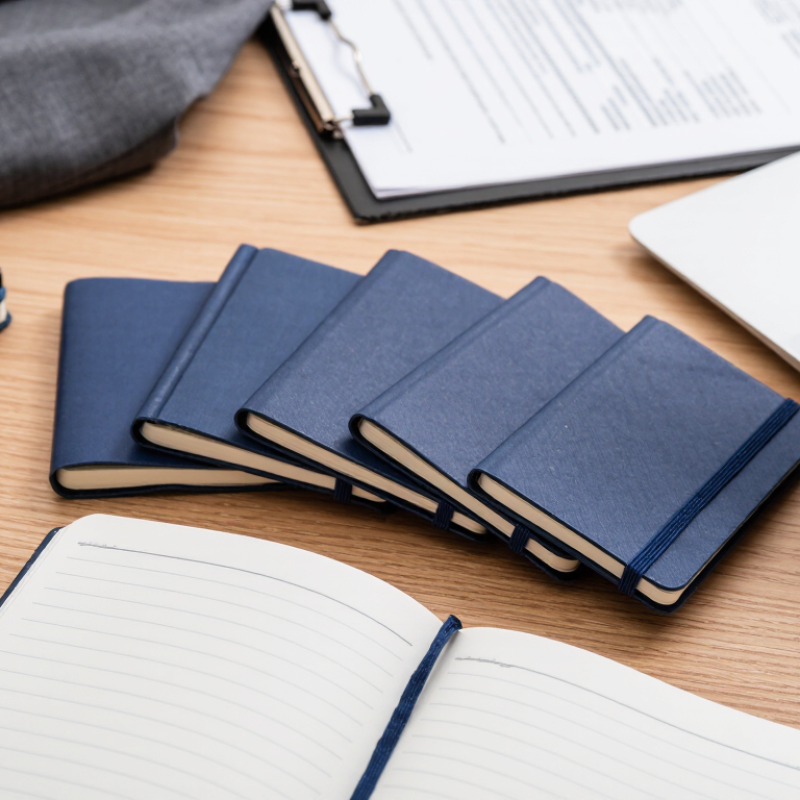
Why Choose A7 Pocket Notebooks for Your Business?

What Defines an A7 Pocket Notebook for Business Use?

An A7 pocket notebook is defined by its compact size: approximately 74 by 105 millimetres. It can slip into a jacket pocket, small work bag, or desk drawer without taking much room. For business use, that size matters when someone needs to note a client’s preferred date, capture a delivery detail, or sketch a quick idea during a meeting. Small enough to carry.

Size alone does not make a notebook useful at work. A practical business notebook should have pages that resist ink showing through, a binding that stays secure, and a cover that can handle daily handling. The paper does not need to feel luxurious, but it should suit the pen people actually use. Testing a sample with a ballpoint or gel pen can reveal smudging or bleed-through before a team orders in bulk.

The limited page area is part of the definition, too. It encourages brief notes, but it is awkward for long minutes, detailed diagrams, or forms with many fields. That trade-off is easy to overlook. A clear date line, simple ruling, and numbered pages can make short notes easier to find later. Yet page numbers add little if nobody records where important information is. For shared business use, choose a durable format and decide how notes will be filed or transferred, rather than expecting the notebook to organize itself.

Why Choose A7 Pocket Notebooks for Your Business?

An A7 sheet measures 74 × 105 mm under the ISO 216 paper-size standard. Its page area is half that of A6 and one quarter that of A5, making it a compact option for brief notes on the go.

Page areas are calculated from ISO 216 standard sheet dimensions; notebook cover size may vary.

How A7 Notebooks Support Note-Taking on the Move

An A7 notebook measures about 74 by 105 millimetres, making it easy to slip into a coat pocket or small bag. Small enough to carry. It is ready when a customer shares a detail, a delivery time changes, or an idea appears between meetings. A quick note can capture names, figures, and next steps without unlocking a phone or searching for an app.

That matters in busy workplaces: the 2023 Work Trend Index surveyed 31,000 people across 31 countries; 64% said they struggled to find time and energy for their work, while 68% reported too little uninterrupted focus time.

A pocket notebook cannot solve workload pressure, but it offers a simple way to record a thought before attention shifts.

Handwriting has evidence behind it, too. In a 2014 study published in Psychological Science, Mueller and Oppenheimer found that laptop note-takers recorded more words, yet handwritten note-takers did better on conceptual questions.

An A7 page encourages brief prompts rather than full transcripts: “call supplier,” “check revised total,” or a small sketch of a layout.

The limitation is real. Tiny pages fill quickly, and cramped writing can become hard to read. Not magic. Leave a little space between entries, add dates, and move detailed plans to a larger page when needed.

How Customization Turns Notebooks into Business Brand Assets

An A7 pocket notebook is small enough to slip into a jacket pocket, yet useful for capturing a client’s request or a quick task list. Its compact size also makes it easy to hand out at meetings and events. The cover is often the first detail people notice. Small details matter.

Customization can turn that simple object into a practical brand asset. Add a clear logo, choose cover colors that match your visual identity, and consider a short line of useful text inside. A subtle mark may feel more inviting than a large logo across the cover. Paper quality matters, too: pages should handle everyday pen use without distracting bleed-through. Test it first.

Think about how recipients will actually use the notebook. A durable cover and a secure binding help it survive a crowded bag; a simple layout leaves room for notes, sketches, or appointment details. Ask for a physical sample before approving a large order. Colors can look different on screen, and a design that seems balanced digitally may feel cramped at A7 size. Customization works best when it serves the user as well as the business. A notebook that gets used keeps its message in view. A notebook that feels like an advertisement may stay in a drawer.

What Cost and Ordering Factors Businesses Should Consider

For A7 pocket notebooks, compare the landed cost, not just the unit price. A standard A7 page measures 74 × 105 mm, so small changes in paper weight, page count, or cover stock can affect both price and thickness. Request separate quotes for setup, printing, binding, packaging, and freight. Ask how minimum order quantity changes the unit cost. A low quote may hide expensive setup fees. Check the proof carefully, too; correcting a layout after production starts can waste the savings.

Paper prices can move, so businesses placing repeat orders should check the U.S. Bureau of Labor Statistics’ Producer Price Index for paper mills when reviewing supplier quotes. Material choice matters as well. The U.S. Environmental Protection Agency’s 2018 Advancing Sustainable Materials Management report recorded a 68.2% recycling rate for paper and paperboard. Recycled stock may support purchasing goals, but it is not automatically cheaper or equally suitable for every cover and writing surface. Test a sample with the actual pen type. Slight show-through can matter in a compact notebook. Compare delivery lead times, carton quantities, and reorder thresholds against your event or staff-distribution schedule. One detail is easy to miss: storing excess stock also has a cost.

Why Choose A7 Pocket Notebooks for Your Business? — Cost and Ordering Factors to Consider
Factor What to Check Cost or Ordering Impact Practical Business Consideration
Finished size A7 paper measures 74 × 105 mm under the ISO 216 paper-size standard. A compact format can use less paper than larger notebooks, but the final cost also depends on page count, materials, and production method. Confirm the finished dimensions and usable writing area before approving a sample.
Order quantity Compare the supplier’s minimum order quantity with the number of notebooks your business can use. Higher quantities may reduce the unit price, while larger orders require more upfront spending and storage. Request quotes for several quantities and compare the total order cost as well as the unit price.
Page count Specify the number of sheets or pages, and clarify whether the cover is included in the count. More pages generally require more paper and can affect notebook thickness, weight, and shipping cost. Choose a page count that suits the intended use rather than ordering extra pages by default.
Paper specification Check paper weight, color, finish, and suitability for the writing tools employees or customers will use. Paper choices affect material cost, notebook weight, and the feel of the finished product. Test a physical sample for readability, writing comfort, and ink show-through.
Cover and binding Compare cover stock and binding options, such as stapled, glued, or spiral-bound construction. Materials and construction can change production cost, durability, bulk, and how easily pages turn. Match the binding to how the notebook will be carried, used, and stored.
Customization Confirm artwork requirements, print coverage, colors, and whether setup or proofing is charged separately. Custom printing may add setup costs or affect the unit price, especially for smaller orders or complex designs. Ask for a digital proof and confirm any artwork fees before production begins.
Packaging Check whether notebooks are packed individually, in bundles, or in bulk cartons. Packaging can affect material use, handling time, storage, and shipment dimensions. Specify packaging that supports distribution while avoiding unnecessary materials.
Shipping and delivery Confirm the shipping destination, delivery method, dispatch date, and whether shipping is included in the quote. Freight, delivery speed, and shipment weight can change the total landed cost. Compare quotes using the delivered cost and allow time for production, transit, and receiving.
Lead time and reordering Ask about production schedules, proof approval deadlines, stock availability, and reorder requirements. Short deadlines or repeat setup needs may affect the cost and availability of future orders. Order early and keep approved specifications to make repeat orders easier to compare.
Quote comparison Compare specifications, quantity breaks, setup fees, taxes, packaging, and delivery terms across quotes. A low unit price may not represent the lowest total cost if additional charges are excluded. Use the same written specifications for every quote and review the complete order total.

How to Choose A7 Notebook Features for Workplace Needs

Why Choose A7 Pocket Notebooks for Your Business?

An A7 notebook measures 74 × 105 mm under ISO 216, making it easy to keep beside a keyboard or in a jacket pocket. For workplace use, choose features around the notes people actually take: quick task lists, meeting reminders, or delivery details. A durable cover helps when notebooks travel between desks and site visits. Check the binding, too; pages that lie flat are easier to write on while standing. Small can be useful. It can also feel cramped.

The 2023 Work Trend Index survey of 31,000 workers across 31 markets reported that 68% lacked enough uninterrupted focus time during the workday. That finding does not prove that notebooks improve concentration, but it points to a practical need: capture a thought quickly without opening another screen. Consider clear ruling, paper that suits your usual pen, and enough pages for a week or two. A tiny notebook may need frequent replacement. That trade-off is easy to overlook.

Tips: Test a sample during a real workday. Write a short checklist, turn pages with one hand, and check for ink showing through. Pick a cover color that is easy to spot in a shared meeting room. If staff write longer notes, A7 may be too small; choosing compactness over comfort is not always the right call.

FAQS

What size is an A7 pocket notebook?

It measures about 74 × 105 millimetres. It fits in a jacket pocket or beside a keyboard. Small, but handy.

What business notes suit an A7 notebook?

Use it for quick task lists, meeting reminders, client dates, or delivery details. It works best for brief entries, not long minutes.

What paper should I look for?

Choose paper that works with your usual ballpoint or gel pen. Test a sample for smudging and ink showing through. One page can reveal a lot.

Which binding and cover details matter?

A secure binding helps pages stay in place during daily use. A durable cover handles trips between desks and site visits. Pages that lie flat help when writing while standing.

Can A7 notebooks hold longer meeting notes?

The page area can feel cramped for detailed diagrams, long minutes, or forms with many fields. I still find this trade-off easy to miss. Not ideal.

Do page numbers make notes easier to find?

They can help alongside a clear date line and simple ruling. But page numbers do little unless someone records where important notes are filed.

Can a pocket notebook improve workplace focus?

It provides a quick place to capture a thought without opening another screen. A 2023 survey reported that 68% of 31,000 workers lacked enough uninterrupted focus time. That does not prove notebooks improve concentration.

How can a team choose the right format?

Try one during a real workday: write a checklist, turn pages with one hand, and check for ink showing through. Choose an easy-to-spot cover color for shared rooms. If staff write longer notes, A7 may feel uncomfortable. Not always.

Conclusion

A7 Pocket Notebooks offer businesses a compact, practical way to capture ideas, reminders, and key details throughout the workday. Their small size makes them easy to carry between meetings, on site visits, or while travelling, while a well-chosen layout can support quick note-taking and keep information organized. Compared with relying only on digital devices, a pocket notebook provides a simple, readily available option for recording thoughts whenever they arise.

Businesses can also customize notebooks with their logo, colors, or useful interior features, turning an everyday tool into a consistent brand touchpoint. Before ordering, consider the intended users, paper and cover options, print requirements, quantity, production time, and overall budget. The best choice balances portability and durability with the workplace’s note-taking needs, so employees can use the notebooks regularly and the investment remains practical.

Oliver

Oliver

Oliver is a professional marketing specialist with a deep understanding of the company’s products, customers, and industry trends. With a strong combination of strategic thinking, market insight, and product knowledge, he helps communicate the value of the company’s solutions in a clear, practical,......