
What Is an A5 Notebook and What Is It Used For?
An A5 notebook measures 148 by 210 millimeters, roughly half the size of an A4 sheet. That familiar format offers room to write without feeling like a desk-sized planner. A5 Notebooks are often used for class notes, meeting records, journaling, sketches, and daily plans. They can slip into many backpacks and work bags, though some smaller purses may not accommodate them.
The format is useful because it balances writing space and portability. A ruled page can hold a meeting’s key points; a blank one can become a quick map or rough drawing. Ryder Carroll, creator of the Bullet Journal method, describes the notebook’s wider purpose: “The Bullet Journal is a mindfulness practice disguised as a productivity system.” His point helps explain why people use paper not just to store information, but to notice and organize their thoughts. The quotation describes his method, not a special feature of A5 paper.
Still, paper is not magic. A notebook can be too bulky for one person and too small for another. Page ruling, binding, paper weight, and cover durability matter as much as the label on the cover. Someone who writes with a fountain pen may care about ink showing through; a commuter may care more about a firm cover and a secure closure. Choosing an A5 notebook is therefore practical, but personal. The best choice is the one that suits the way you actually write, carry, and revisit your notes.
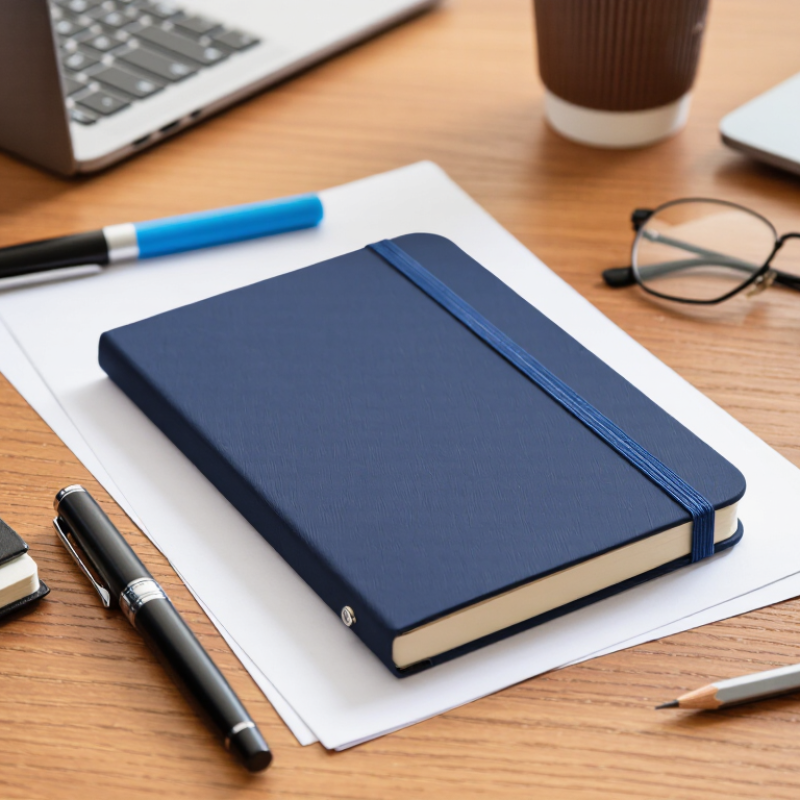
Defining the A5 Notebook Format
A5 is a standardized paper size, not simply a casual label for a small notebook. ISO 216:2007, the international paper-size standard, specifies A5 as 148 × 210 millimeters. In inches, that is about 5.8 × 8.3. Its proportions follow the A-series ratio of 1:√2, so the page keeps the same shape when resized. Cut an A4 sheet in half, and you get two A5 sheets. That matters when printing inserts or replacing pages. A notebook’s covers and binding may add bulk, though, so the finished book can measure slightly more. Small, but noticeable.
This format sits between pocket-sized and desk-sized paper. It offers room for a full-width to-do list, class notes, or a quick sketch, while still fitting many everyday bags. The exact feel depends on the binding: a spiral can lie flat, while a tightly sewn spine may resist opening. Not every A5 notebook has identical usable space. Page margins, ruling, and punched holes reduce the writing area. I would check the listed page dimensions before buying refills; “A5” alone does not describe the paper layout. The standard defines the sheet size, not the notebook’s weight, page count, or paper quality.
A5 Dimensions and Comparisons with Other Paper Sizes
An A5 sheet measures 148 by 210 millimeters, or about 5.8 by 8.3 inches. It has half the area of A4, formed by cutting an A4 sheet across its shorter dimension. Small, but not tiny. The A-series keeps the same proportions across sizes, so A5 pages pair neatly with A4 documents. Notebook covers may be slightly larger to allow for binding and page edges. That detail is easy to miss.
Compared with A4, A5 takes less desk space and fits into many everyday bags. Compared with A6, measuring 105 by 148 millimeters, it gives more room for notes, diagrams, or a short journal entry. A5 is smaller than B5, which measures 176 by 250 millimeters and can better suit broad layouts or larger handwriting. US Letter paper, at 216 by 279 millimeters, is both wider and taller than A5. When comparing notebooks, check the usable page dimensions, not just the cover label.
For a lecture, an A5 page can hold a clear heading, a few bullet points, and a small sketch without spreading across a full desk. It is also easy to carry between home and work. The trade-off is space: detailed charts or long notes may feel cramped. I would compare a sample page with your usual handwriting before choosing; page size alone does not tell the whole story.
Common A5 Notebook Features and Binding Styles
An A5 notebook measures about 148 by 210 millimetres, close to half a sheet of A4 paper. It fits in many work bags and leaves enough room for meeting notes, sketches, or a daily list. Common page options include ruled, dotted, squared, and blank layouts. A margin can help separate notes from action items, while numbered pages make longer projects easier to navigate. Small features matter, too. An elastic closure keeps loose papers in place, and a ribbon marker helps you return to a page quickly. Some covers include a pocket for receipts or reference cards. Useful, not essential.
Paper thickness varies, so check the notebook’s specifications if you use fountain pens or markers. Ink can show through or feather, depending on the paper and ink combination. A quick test near the back is sensible. Binding affects how the notebook feels in use. Sewn bindings often open relatively flat and hold pages securely, though some still resist at the spine. Glue-bound notebooks can be slim and affordable, but may not lie flat when new. Spiral bindings fold back easily and suit desks or cramped spaces; the wire can snag in a bag. Disc-bound styles let you move pages around, but their edges may catch or wear. I would not choose by appearance alone. Consider where you write, how often you turn pages, and whether a pen needs room beside the spine.
Practical Uses of an A5 Notebook
An A5 notebook measures 148 by 210 millimetres under the ISO 216 paper-size standard. Small enough to carry. It slips into many bags and sits beside a keyboard without taking over the desk. Use its first pages for weekly appointments, then reserve a few pages for errands, meal plans, or quick sketches. A dated list helps reveal which tasks keep being postponed; that pattern can be useful, even if it is a little uncomfortable.
For work or study, keep one page for meeting actions and another for questions to check later. A 2023 Work Trend Index survey of 31,000 workers across 31 markets reported that 68% lacked enough uninterrupted focus time. A notebook cannot fix a crowded schedule, but it can capture a thought without opening another screen. Make the note specific: “send revised figures Tuesday” is more useful than “follow up.”
Handwriting may also suit study notes. A 2024 EEG study involving 36 university students found broader brain connectivity during handwriting than typing, though that small study does not prove every learner benefits equally.
For fieldwork, an A5 page gives room for a short observation, a rough diagram, and a time stamp. For personal planning, track sleep or spending with simple marks rather than elaborate tables. The format has limits. Detailed project plans may need more space, and undated pages can become hard to search. I still forget to review old lists sometimes. A weekly check-in helps, but it is not magic.
Choosing an A5 Notebook for Your Needs
Choosing an A5 notebook starts with how you will carry and use it, not with its cover. At about 148 by 210 millimeters, it fits many bags while leaving room for notes, sketches, and daily plans. If you write on the bus or between meetings, check whether it opens flat and whether the cover bends easily. Small details matter.
Paper choice depends on your pen and writing style. Medium-weight paper often suits ballpoint and gel pens, while heavy ink may show through. Test a few pages if possible, especially if you write on both sides. Smooth paper can feel quick; a lightly textured surface may offer more control. Neither is universally better.
Choose a layout that supports your habits: lined pages suit notes, dotted grids help with simple diagrams, and blank pages leave sketches unrestricted. A dated planner can help with appointments, but unused pages may feel wasteful. An elastic closure or pocket can hold loose receipts, though both add bulk. It is easy to focus on features you rarely use, so consider where the notebook will actually go and what you tend to write down.
FAQS
A5 measures 148 × 210 millimeters, or about 5.8 × 8.3 inches. Small, but useful.
A5 has half the area of A4. It offers more writing room than A6, which measures 105 × 148 millimeters.
The paper follows that standard size, but covers may be larger because of binding and page edges. Easy to overlook.
A page can hold a heading, bullet points, and a small sketch. Detailed charts may feel cramped.
Common options include ruled, dotted, squared, and blank pages. Numbered pages and margins can help organize longer projects.
Spiral bindings fold back easily, while sewn bindings often hold pages securely. Glue-bound notebooks can resist lying flat when new.
It depends on the paper and ink. Ink may show through or feather, so test a page near the back.
Check usable page dimensions, paper thickness, and binding. Compare a sample page with your handwriting. I sometimes forget that last part.
Conclusion
An A5 notebook is a compact writing pad based on the international A5 paper size, measuring 148 by 210 millimeters. It is smaller than A4 paper, so it takes up less space while offering more room to write than a pocket-sized notebook. Its dimensions make it convenient to carry in a bag and use at a desk, in class, or on the go.
A5 Notebooks come in a range of page layouts, covers, and binding styles, including stitched, spiral, and ring-bound designs. They can be used for notes, journaling, planning, sketches, lists, or meeting records. When choosing one, consider how you plan to use it, the paper ruling, page count, cover durability, and whether you prefer a notebook that lies flat or allows pages to be rearranged. The right option balances portability with enough space for your everyday writing needs.

Blog Tags: